
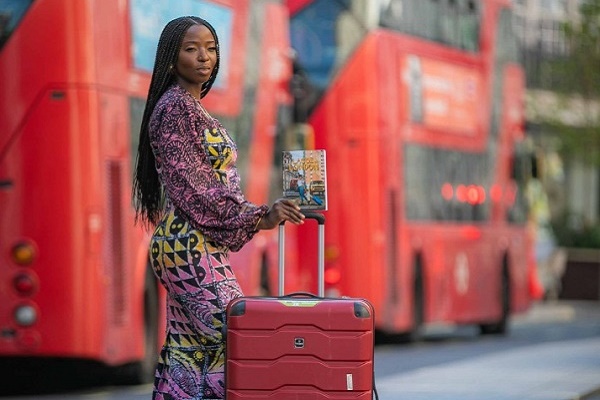
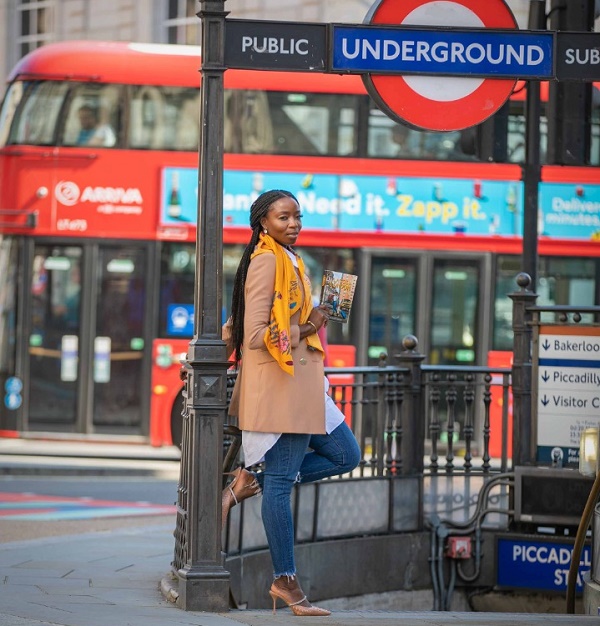
Lola Ekugo is a Digital and Innovation specialist with over 14 years of experience in the industry.
She started her career as a software engineer at Investec Asset Management, London where she was responsible for the development of digital solutions in the asset management portfolio. Since then, she has worked in various capacities across different roles in the financial services industry in Europe and Africa at companies including Dresdner Klienwort, Commerzbank and BNP Paribas.
Now, she is the chief digital officer of FBN Quest Nigeria, which is an investment and asset management entity of the first bank holding company.
You started your career as a software engineer in London, when did you realise you can be a creative writer?
To be fair, I realized I could be a creative writer long before I realized I could be a software engineer. When I was young, I always loved to write and would write different poems. In fact, I think there was a time I thought I was going to be a songwriter as well because I loved writing songs and singing so I would write different songs, poems, and short stories.
My career as a software engineer was a passion that I discovered when I moved to the UK in 2002, for a computer foundation course. It was at that point that I realised that I was great at software programming, it came naturally to me.
It was a later passion, but I am so happy that I found it. I am thankful to be doing things I love, technology and creative writing.
Having a career in the financial services industry one would have expected you to write a technical/ financial book. Why did you choose a literary book like Lagos to London?
I believe that there will be many opportunities for me to write different kinds of books. Don’t be surprised in future if you see me write a book on technology or digital. The reason why I wrote Lagos to London first, was because the book speaks to a defining point in my life, the point where I was able to find my path.
The world is at a point where so many young people are leaving Africa, trying to find their way in the world without any help. On the other hand, we also have people in the diaspora who need some sort of guidance in terms of how to hack it and be successful.
I felt that this was a good problem to solve. The Lagos to London novel is a fiction novel aimed at inspiring young people to strive to be their best wherever they find themselves in the world as global citizens by sharing real-world experiences and promoting good values critical to the attainment of success through unique storytelling. lt is about finding your own path, living your dream, and making your mark wherever you find yourself in the world. This is an important and urgent message for young people today, which is why this is my first novel.

Is there any way in which the book is about your experiences when you made your first trip to London?
So, Lagos to London is a fictional novel. However, I believe that it is everyone’s story, The experiences of the characters are very real and relevant. One of the consistent reviews I have received since the novel was launched, is that the book is so relatable. Lagos to London is a book about choices and conquering challenges, we all have choices to make, whether it is to leave a country, stay in our home country, return home, take up a new opportunity, discover a new life, experience or whatever it may be.
In addition, one thing I say to people is that this novel is like taking a trip to London without leaving your seats.
Seems you are now resident in Lagos, when did you relocate home and why?
I started spending more time in Lagos in 2015, but it only became a real base for me in 2018 when I decided to take up an interesting opportunity to make a greater impact. However, London remains a second home for me as I have strong ties and commitments there.
What were the challenges you faced while writing this book?
The biggest challenge was that we only have 24 hours in a day.
I am a busy digital executive, and I am very passionate about the work I do in technology. I am also married with various responsibilities in different capacities. Finding the time to write was a big challenge for me, as you know with everything, there is an opportunity cost. I remember when I started writing the novel, I attended a creative writing course in City Academy in London, then I would take time out very early in the mornings, especially Sunday mornings before church, to put my thoughts down on paper. Prioritisation and making sacrifices played a big part in overcoming this challenge.
The second was my mind, at a time I struggled with the thought of being a Digital and Innovation specialist and a writer at the same time. I wondered if you could be a technical and a creative writer at the same time. I later realised that it is all about perspectives and my calling was really to solve real-world problems. With digital, I am solving problems with technology and with writing, I am solving problems with a pen. Sometimes our biggest battles are first within ourselves, the truth is that we are many things and can be many things at the same time.
How much research was involved in writing Lagos to London?
A lot of research was involved, because, as I said, it is everyone’s story. I needed to ensure I had conversations with people, friends, family, I mean everyone in addition to significant research online and offline. Understanding the current realities and psyche of young people today was very important. Understanding people’s motivations, and what people want for themselves was key to writing this. My hope is that Lagos to London would impact many lives.

How long did it take for you to write the book? Did you have a long pause during this period? If yes, why and for how long?
Honestly, I find this question interesting because people sometimes think, I just started writing this book in 2020 and then I released it in November 2021. I wish this was the case but not at all. The major challenge I faced as I mentioned earlier was time.
I started this book over four years ago and I did a lot of things during the span of time when this book was being written. I started and completed an MBA at Imperial College, London while working, I grew in my career, engaged in some entrepreneurial activities, and set up some social good and charity initiatives. During my MBA, I didn’t write much and for some time after that but when the pandemic hit, I realized that this was a dream unrealised and being in Nigeria and seeing the challenges with people emigrating in large numbers in search for greener pastures I thought this was the right time for the Lagos to London novel to be released. I picked up from where I left off and I was determined to finish the book.
Is Lagos to London your first book?
Yes, it is my first book. I had written poems, short stories and blogs but not a book. So yes, this is my first book.
Do you have any mentors if yes who are they and why are they your mentors?
I have a lot of people that inspire me, too many to mention. Some who I have connections with and some who I don’t but played a key role in my life and decisions. My parents for me are my greatest inspiration and I forever thank them for the role they have played in my life.
Why did you pick the two major characters in your book?
Now, this was so important because I realized that to really tell the story I needed to have two major characters, Remi Coker, and Nnamdi Okonkwo. Remi Coker comes from the rich, upper class of Nigeria, while Nnamdi Okonkwo comes from the lower-class echelon, he is essentially a hustler with a dream.
In the world today both characters are on two completely different lanes, their experiences when they do travel abroad are always somewhat different. I wanted the novel to be relatable where with these two people, most people will be able to see themselves as one of the characters or somewhere in between.

If given a chance to change the way you spent about 14 years away from Nigeria, what will you change and why?
Well, I am not sure that there is much I would change, about the way I spent my 14 years away from Nigeria. For me, there were some key things that were important to me when I was leaving, I felt my parents were investing in me and so, I really wanted to give them a good return. I had made up my mind to finish well, get a good job and do well in my career. I did finish with a first-class, I got a good job. I did well in my career and worked with different notable investment banks including BNP Paribas, and Commerzbank, I also met my husband in the UK, and got married there. I learnt how to drive, and I was even able to discover my passion for technology, so, I wouldn’t really change the way I spent my time. I made a lot of good friends as well, so I think I spent it very wisely.
Do you love travelling? If yes, what exactly do you love about going on trips?
The answer is an absolute YES. I love travelling enough to have set up a blog on travel years ago, called www.weekenderHQ.com. Travel for me is about exposure, it expands your mind in ways that you could never imagine. I am very keen on exploring, gaining knowledge, and understanding other cultures. A big part of my life and career is around solving real-world problems, travelling has made me see things from different perspectives and from different lenses which have enriched me as a person greatly.
What advice will you give an average youth who yearns to leave home and see the world?
My advice is to go see the world and explore but understand that the grass is not always greener on the other side. It is about how you tender to your grass and keep it. Life is really what you make out of it, not everyone that leaves home and travels to live in another country makes it there.
In addition, if you do get the opportunity to leave home to see the world, always remember that you have the responsibility to do well by displaying good values and not take shortcuts both for your own success and that of your home country. We must try to be ambassadors of our country because people are making judgments based on your character, and then making inferences about your home country and its people based on that. I believe that if you follow the right path, it always sort of works out in the end.
What challenges did you face as a migrant?
There were certainly challenges, I think my first challenge was being away from my family and friends then having that huge responsibility which I placed on myself to excel. There was also the challenge of culture shock, I remember there was a lecturer in the university, who I could barely understand what she was saying for the first few weeks due to her strong English accent. I also remember having to work part-time by choice to supplement my pocket money. There was a point when I felt racially discriminated against at a place I worked, but I didn’t let that bother me. I feel like you need to define who you are and what you want to get out of whichever country you are.
There will be challenges, some people may like you and others may not, but it is your responsibility to ensure that you do your absolute best. Do the right thing, create opportunities for yourself, focus on the positive things and the value you are bringing to the table. These concepts taught me a lot, I focused on the beautiful side of the UK one of which is its diversity, and I grew and excelled as a person.
Do you have any regrets about being away from Nigeria for over a decade of your life? If yes, what do you feel you should have done to change it?
I wouldn’t say I have regrets, but I learned a lot. Nigeria is a fast-paced, dynamic and colourful country abound with so many opportunities. When I first moved to the UK, I was just focused on doing my best in the UK and I didn’t really stay in touch with Nigeria. At the latter part of my time in the UK after I finished university and started working, I realized it was quite difficult for me to integrate whenever I visited Nigeria.
I was like a fish out of the water which I didn’t like, I was afraid of haggling and even in conversations, I didn’t know much about the current affairs in the country. So, I decided to change this by going to Nigeria a lot more, keeping a close eye on current affairs even when I was away and connecting with the people and the environment more when I was around.
Social Media Handles
Instagram | @lolaekugo
Twitter | @LolaEkugo
Facebook | lola.ekugo
Instagram | @lagostolondonseries
Twitter | @Lagostolondon21
Facebook | lagostolondonseries
****
♡♡ Thank you very much for reading! Someone on your timeline may need this information and inspiration, please kindly help us share this post so they can see it ↓↓